Stress
Pause, breathe and make space before choosing what happens next.
 JULIAN
RECOGNISE · UNDERSTAND · RESPOND
PILOT DEVELOPMENTA simple new way for young people to check in with themselves, understand changing energy and moods, and choose a helpful next step.
WHY CHECK YOUR MOOD?
The Mood Map is being developed to help young people pause, name what they are experiencing and identify what support or strategy may help. It complements JCF mentoring and workshops; it is not a diagnostic tool, medical treatment or crisis service.
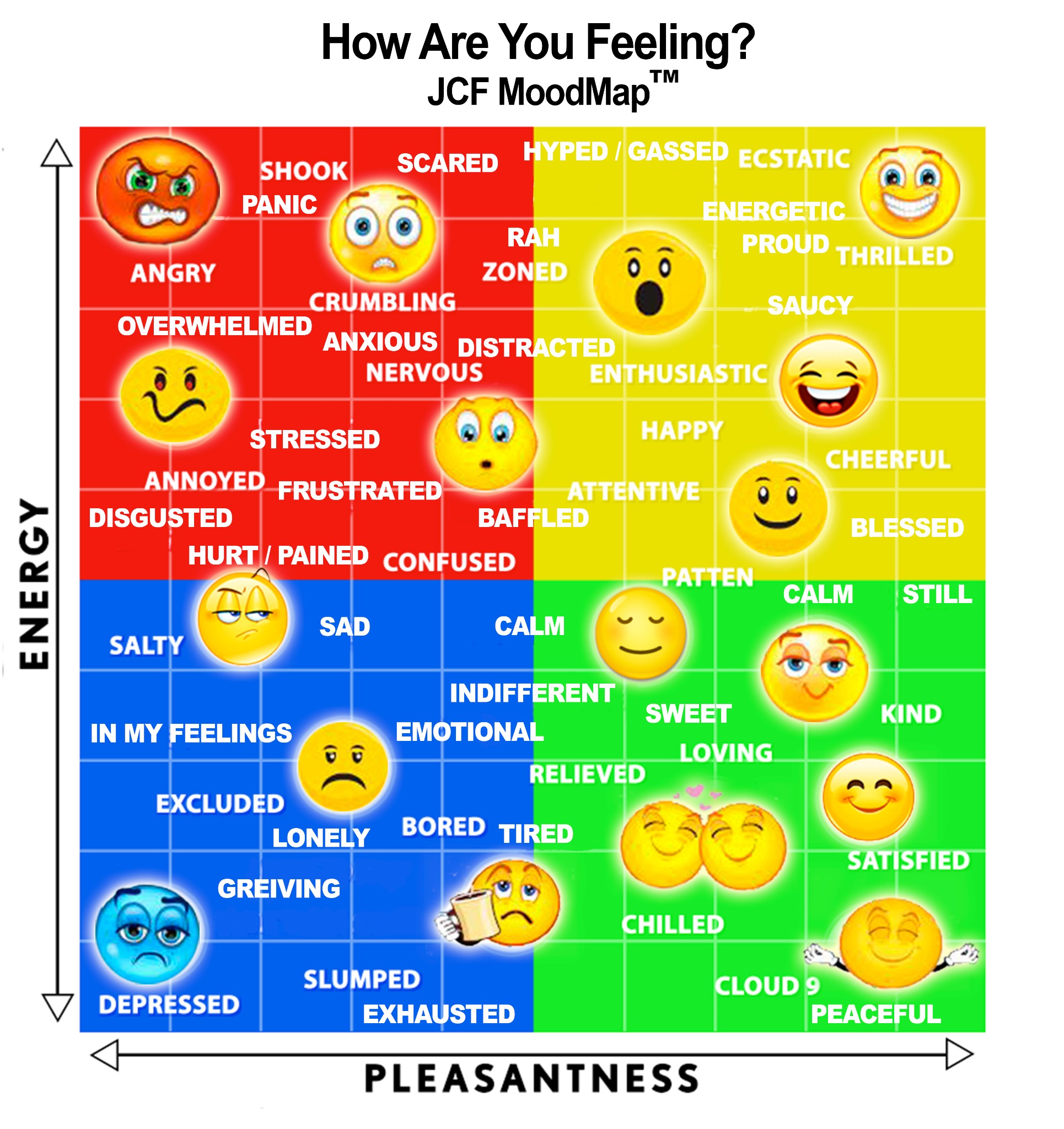
THE ORIGINAL JCF MOODMAP™
Find the words that feel closest to you. Move from left to right for pleasantness and from low to high for energy. There is no wrong place to begin—this is a simple way to notice and talk about how you feel.
Pause, breathe and make space before choosing what happens next.
Channel energy into a positive, purposeful next step.
Notice when extra care, connection or trusted support may be needed.
Recognise steadiness and the strategies that help sustain it.
A SIMPLE CHECK-IN
Pause and recognise your mood and energy.
Explore what may be affecting how you feel.
Find a helpful action or ask a trusted person for support.
BE AMONG THE FIRST
The application is currently in pilot development. Register your interest to hear about testing opportunities and the public release. This page is the permanent destination for future QR codes and official download links.
The Mood Map is not an emergency or crisis service. If someone is in immediate danger, call 999. Young people in the UK can contact Childline free on 0800 1111.